Pillar guide
Sourcing Sportswear From Sialkot, Pakistan: The Complete Guide
A manufacturer's-eye guide to Sialkot: the 140-year history behind the specialisation, what you can realistically source, what to expect on MOQs, payment, QC and shipping, and the questions worth asking any supplier here.
Quick answer
Sialkot, Pakistan has been a specialised sporting goods manufacturing centre for over 140 years, supplies sportswear and equipment to brands including Nike, Adidas and Puma, and produces a large share of the world's hand-stitched footballs. For sportswear specifically — not just footballs — the city has a dedicated workforce of over 10,000 people directly engaged in production, generating roughly $100 million in sportswear exports annually. That specialisation is the real reason to consider sourcing here rather than from a generalist manufacturing region: this is a place built around sports goods and sportswear, not a general apparel hub that happens to also make jerseys.
We manufacture in Sialkot, so read this as an insider's account rather than a neutral one. Everything below that can be checked, we have written so it can be checked.
A history that actually explains why this city, specifically
Sialkot's sporting goods industry traces back to 1883, when local craftsmen began producing cricket bats, hockey sticks and polo sticks. Football production followed in 1918, when the city supplied balls to British Army units. What followed over the next century turned a regional craft into a globally significant industry: Sialkot-manufactured footballs have been used at multiple FIFA World Cups, and the city is often called the sports goods capital of the world. Today more than 200,000 people are directly employed across roughly 2,400 companies in the sector, the industry contributes over $900 million a year to Pakistan's exports, and Sialkot is the country's second-largest exporting city.
Why that matters to a buyer today rather than being a historical curiosity: this is a deep, multi-generational base of craftsmanship and technical knowledge, not a manufacturing base that appeared in the last decade to chase low labour costs. Family businesses that have worked in sporting goods for three or four generations sit alongside larger, modern export-focused manufacturers — a combination that blends traditional hand skill with contemporary production technology.
One honest piece of history a complete guide shouldn't skip
Sialkot's hand-stitched football segment faced serious, well-documented international scrutiny over child labour in the mid-1990s, following international media attention in 1996. The response was substantial: in February 1997 the Sialkot Chamber of Commerce and Industry, the International Labour Organization and UNICEF signed the Atlanta Agreement, which centralised football stitching into monitored production centres specifically to remove child labour from the process. It is widely cited as one of the more significant industry-wide reform efforts of its kind — and independent monitoring since then has also found the work incomplete rather than fully resolved.
This history is specific to hand-stitched football production, which is a different process from the machine-sewn sportswear and apparel manufacturing — jerseys, tracksuits, uniforms, teamwear — that most brands are actually sourcing when they contact a manufacturer here. But the practical takeaway applies everywhere, in any country and regardless of a region's reputation: ask any manufacturer for current, verifiable labour and safety certifications rather than inferring standards from a region's overall image. Our supplier-vetting checklist covers exactly how to ask, and what a credible answer looks like.
What you can actually source from Sialkot
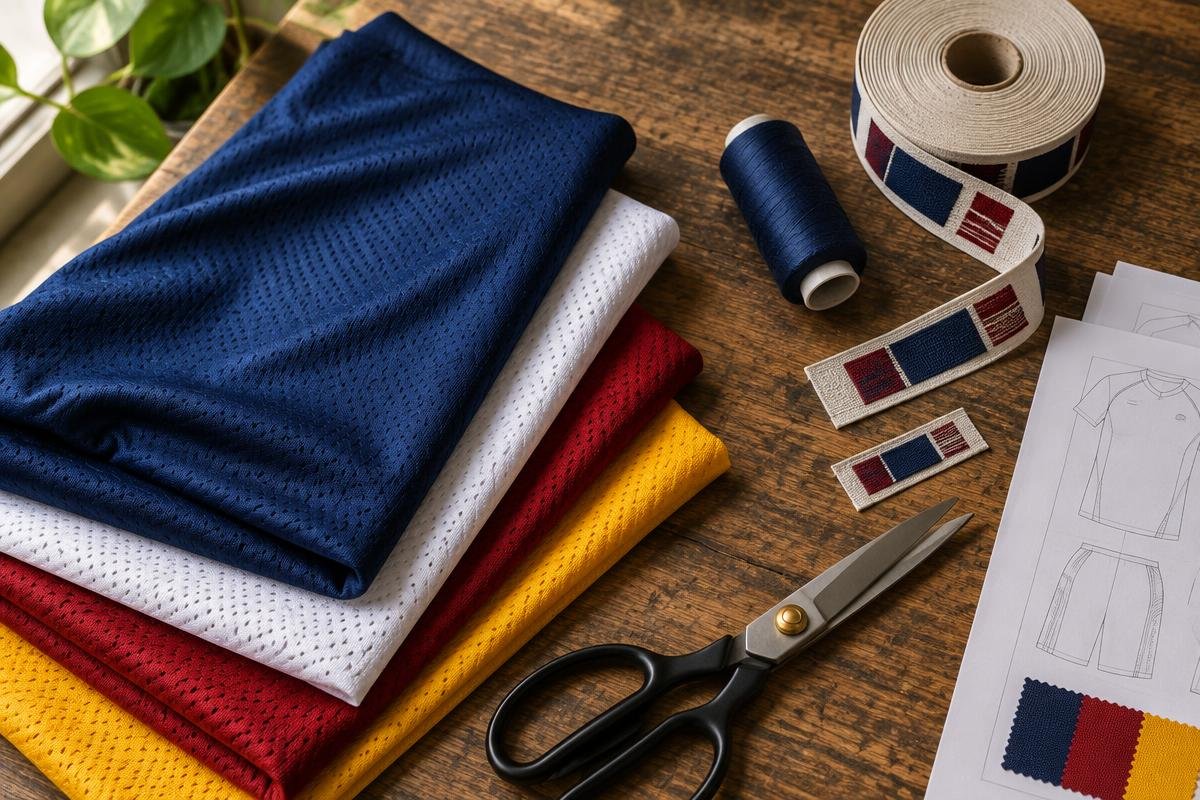
The city's specialisation runs deep across several related categories:
- Sportswear and teamwear — jerseys, tracksuits, training kits, warm-ups, custom uniforms. This is Belta's own focus.
- Gloves — Sialkot has historically been one of the world's largest exporters of gloves for motorcycling, goalkeeping, boxing and baseball.
- Footballs and hand-stitched equipment — the segment the city is best known for internationally.
- Leather sporting goods more broadly, plus the tanning and finishing capacity that supports them.
Because manufacturers and their supply chains overlap, a single sourcing trip or relationship can often cover more than one of these categories. What it will not automatically cover is the same standard across all of them — confirm what is produced in-house and what is subcontracted before you assume.
Why the specialisation is real, not just a claim
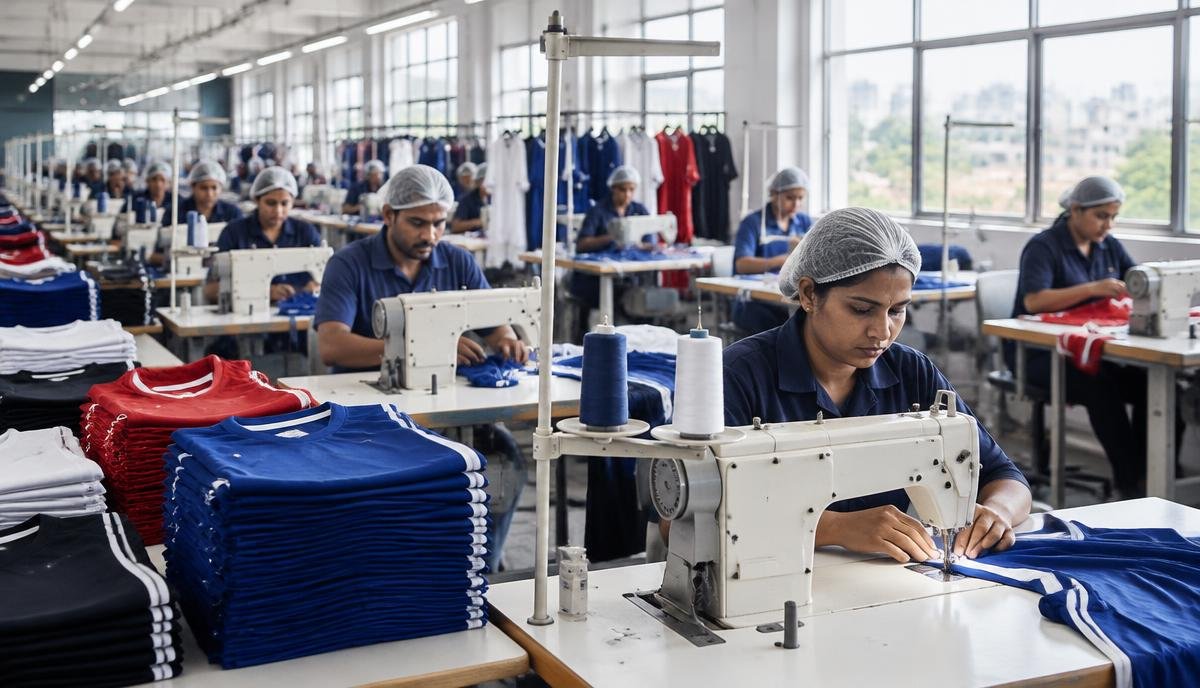
Any manufacturing region can claim expertise. Three things make Sialkot's claim checkable rather than promotional:
- Brand relationships. Nike, Adidas and Puma have all sourced sporting goods or sportswear from the city — verifiable through their own published supplier disclosures rather than only through local marketing.
- Sportswear-specific export data. Roughly $100 million in annual sportswear exports from a dedicated workforce, rather than a general apparel export figure with sportswear buried somewhere inside it.
- Supporting infrastructure density. Fabric suppliers, trim suppliers, printing and embroidery specialists, and third-party inspection services all exist within short distance of each other. That density is the practical consequence of decades of specialisation, and it is why a sampling round here can move in days rather than weeks.
One honest limitation: Sialkot is a make-and-finish cluster, not a fibre-producing region. Most performance fabric is sourced from Faisalabad, Lahore or Karachi, or imported. That is not a weakness — it is normal for apparel clusters worldwide — but it does mean fabric lead time is a separate line on your timeline from cut-and-sew.
What to actually expect as a buyer sourcing from Sialkot
Order structure and minimums. Low-MOQ custom manufacturing is well established here precisely because the industry serves everyone from small first-time brands to large multinational programmes. Our guide to ordering custom team jerseys has realistic MOQ, lead-time and cost ranges rather than a single headline number.
Payment. The same protections that apply to any overseas manufacturing relationship apply here: a staged deposit rather than full payment upfront, a written agreement, and verification before money moves. See how to pay a sportswear manufacturer safely.
Quality control. Agree AQL inspection levels, measurement tolerances and the sample-approval process before you commit to bulk. Our apparel quality control guide sets out what to specify in writing.
Logistics and customs. Importing from Pakistan uses the same Incoterms and HS-code fundamentals as importing from anywhere else, with some Pakistan-specific documentation detail. Start with how to import clothing from Pakistan, then Incoterms for first-time importers and HS codes for apparel imports.
Fabric and construction. Most technical sportswear sourced here is polyester or a polyester-heavy blend for performance reasons. See polyester vs cotton for the trade-offs and choosing fabric GSM for activewear for weight decisions. Decoration method matters too: sublimation vs screen printing changes both cost and minimums.
Timelines, realistically. For a new custom style, expect roughly one to three weeks for a first sample round, one to two weeks for revisions and approval, then two to six weeks for bulk production depending on quantity and decoration, plus shipping. Sea freight to Europe or North America commonly runs four to seven weeks; air freight is days. Ramadan and Eid holidays and the pre-Christmas peak season are the two calendar factors most first-time buyers miss.
Communication. English is standard in Sialkot's export trade, and working hours overlap comfortably with Europe and only partially with North America. Ask who your day-to-day contact is and whether they are in production or only in sales — it is a small question that predicts a lot about how a problem gets resolved later.
Sialkot compared with other sourcing options
| Sialkot, Pakistan | Broad generalist hubs | Domestic manufacturing | |
|---|---|---|---|
| Specialisation | Sports goods and sportswear specifically | Apparel among many categories | Varies widely by country |
| Typical MOQ | Low — dozens to low hundreds per style | Often higher for custom work | Low, but unit cost much higher |
| Unit cost | Competitive | Competitive to low | Highest |
| Sampling speed | Fast — suppliers clustered locally | Fast in mature clusters | Fastest |
| Fabric sourcing | Mostly domestic mills elsewhere in Pakistan, or imported | Often mill-adjacent | Often imported |
| Best fit | Technical sportswear, teamwear, gloves | Very broad, non-technical ranges | Small runs, fast turnaround, local-made positioning |
If you have not yet decided whether to go overseas at all, read overseas vs domestic sportswear manufacturing first — this guide assumes that decision is already made.
Common mistakes when sourcing from Sialkot or Pakistan generally
- Assuming a region's reputation substitutes for verifying a specific manufacturer's certifications and trade history.
- Treating "Pakistan" as one undifferentiated option, rather than recognising Sialkot's sportswear specialisation versus other Pakistani regions with different focuses.
- Skipping a sample round because the region's craftsmanship reputation feels like enough assurance.
- Not asking what is produced in-house versus subcontracted — this affects quality consistency and changes which verification questions matter.
- Ignoring the payment and QC fundamentals that apply to all overseas sourcing, on the assumption that a well-known manufacturing region is inherently lower-risk.
- Quoting on price per unit alone, with no agreed spec, tolerance table or inspection standard behind the number.
How to start, in order
- Write a one-page brief: product, fabric target, GSM, decoration method, quantities per size, target landed cost and delivery date.
- Shortlist three to five manufacturers and put the same brief to all of them. Compare what they ask you, not only what they quote.
- Run the vetting checklist: registration, export history, references, certifications, and who owns the factory floor.
- Order samples from your top two. Pay for them; free-sample requests select for the wrong suppliers.
- Approve a sealed sample and a written measurement spec before any bulk deposit moves.
- Agree inspection standard and payment stages in writing, then place the order.
Ready to source from Sialkot? Request a quote at beltasports.com with your product, quantities and target delivery date — Belta Sports will reply with pricing, MOQ and a sampling timeline.
Frequently asked questions
The FAQ block below answers the questions buyers ask us most often about sourcing from the city.
Sourcing from Sialkot with Belta Sports
Belta Sports manufactures private label sportswear and teamwear in Sialkot for importers and brands in the UK, EU, US and Australia. We work to a written spec, sample before bulk, and use staged payment terms. If you want a specific quote — fabric, GSM, decoration, quantities — the fastest route is a short brief through the main company site.
- Direct sourcing vs using a sourcing agent — should you go direct to a Sialkot manufacturer or pay an agent?
Frequently asked questions
- Is Sialkot a good place to manufacture sportswear?
- Yes, for technical, fabric-dependent sportswear specifically. The city has a concentrated, multi-generational specialisation in sporting goods and sportswear manufacturing, working relationships with major global brands, and the supporting supplier infrastructure — fabric, trims, decoration, inspection — that only comes from decades of density in one specialisation.
- What is Sialkot known for manufacturing?
- Sialkot is best known internationally for hand-stitched footballs and sporting goods more broadly, including gloves and leather goods. It also has a substantial, dedicated sportswear apparel sector — jerseys, tracksuits, training kits and teamwear — which is a separate machine-sewn manufacturing process from football stitching.
- Why do international brands source from Sialkot?
- Nike, Adidas and Puma are among the global brands that have sourced sporting goods or sportswear from the city. The draws are concentrated technical specialisation, quality standards developed over decades of export experience, and a competitive cost structure relative to domestic manufacturing in most Western markets.
- Is it safe to source sportswear from Pakistan?
- It can be, using the same protections that apply to any overseas manufacturing relationship: verify the specific manufacturer's trade history and certifications, use a staged deposit rather than full payment upfront, and build quality control into your process. A region's reputation is a starting point for research, never a substitute for verifying the company you are actually paying.
- How is Sialkot different from other overseas sourcing hubs like parts of China?
- The core difference is specialisation depth versus breadth. Sialkot is built specifically around sporting goods and sportswear, while many broader manufacturing regions serve apparel generally alongside many other categories. For a highly technical sportswear product, that narrower specialisation is often an advantage; for a very broad, non-technical product line, a generalist hub may offer more flexibility.
- What is the minimum order quantity for sourcing sportswear from Sialkot?
- It varies significantly by manufacturer, but low-MOQ custom manufacturing — often in the dozens to low hundreds of units per style — is well established here, because the industry serves everyone from first-time brands to large multinational programmes. Ask directly; it is a company-level answer, not a regional one.
- Has Sialkot's sporting goods industry faced criticism?
- Yes, most notably over child labour in hand-stitched football production in the 1990s, which led to the 1997 Atlanta Agreement with the ILO, UNICEF and the Sialkot Chamber of Commerce and significant, though independently assessed as incomplete, reform. That history is specific to football stitching rather than machine-sewn apparel, but it is a legitimate reason to verify certifications with any manufacturer rather than relying on regional reputation.
- Can one supplier relationship cover more than one product category?
- Often, yes. Sportswear, gloves, and stitched equipment supply chains overlap heavily in Sialkot, so a single sourcing trip or relationship can frequently cover several related categories. Confirm what is made in-house versus subcontracted before you assume one supplier covers everything to the same standard.
About the author
Hamza Iqbal
Head of Export Operations, Belta Sports
Hamza has spent over a decade coordinating apparel export shipments out of Sialkot for buyers in the UK, EU, US and Australia.